-
-
-
-
The Satanic Bible by Anton LaVey
-
- 202 views 6 years ago
-
The Satanic Bible by Anton LaVey, first published in 1969, is the foundational text of LaVeyan Satanism. It presents a philosophy centered around individualism, self-empowerment, and hedonism, rejecting traditional religious doctrines and the concept of sin. The book is divided into several sections: the Book of Satan, which challenges Christian moral teachings; the Book of Lucifer, which explores enlightenment and personal development; the Book of Belial, which discusses practical rituals and magic; and the Book of Leviathan, a guide to rituals and invocations. LaVey advocates for a rational and skeptical approach to life, emphasizing personal responsibility and the pursuit of one's desires. The work is often interpreted as a satire of religious orthodoxy, rather than promoting actual worship of Satan. It has been influential in the development of modern occultism and has attracted both followers and critics.
“And Satan is worshiped by men under the name of Jesus; and Lucifer is worshiped by men under the name of Brahma; and Leviathan is worshiped by men under the name of Allah; and Belial is worshiped by men under the name of Buddha” (Aleister Crowley).
“We don’t worship Satan, we worship ourselves using the metaphorical representation of the qualities of Satan. Satan is the name used by Judeo-Christians for that force of individuality and pride within us. But the force itself has been called by many names. We embrace Christian myths of Satan and Lucifer, along with Satanic renderings in Greek, Roman, Islamic, Sumerian, Syrian, Phrygian, Egyptian, Chinese, or Hindu mythologies, to name but a few. We are not limited to one deity, but encompass all the expressions of the accuser or the one who advocates free thought and rational alternatives by whatever name he is called in a particular time and land“ (Anton LaVey).
"In its higher octave, Saturn is the Guardian of the Threshold at the last frontier to the realm of the divine. In this capacity, Saturn is equivalent to Lucifer as the Light Bearer = Prometheus who brought the fire to mankind because he really loved humanity in contrast to god Zeus. In its lowest octave, Saturn is equated with Satan; is the seducer, persisting within the ego and a bar to resolve karmic entanglements" (Communitas Saturni).
"Though associated with Satanism, a philosophy based on the Christian interpretation of the fallen angel, Luciferianism differs in that it does not revere merely the devil figure or Satan but the broader figure of Lucifer, an entity representing various interpretations of "the morning star" as understood by ancient cultures such as the Greeks and Egyptians. In this context, Lucifer is a symbol of enlightenment, independence, and human progression and is often used interchangeably with similar figures from ancient beliefs, such as the Greek titan Prometheus or the Jewish Talmudic figure Lilith" (Wikipedia).
“There are three categories of Satanists: 1) Traditional Satanists, 2) Religious Satanists, and 3) Freestyle Satanists“. “I would divide Satanic poseurs into three groups – Satanists, Christian Satanists, and nuts. I’d redefine Christian Satanists as those who are attracted to Satanism but can’t seem to break away from Christianity altogether. They continue to work within a primitive framework of Good vs. Evil, taking the part of Evil instead of Good“ (Anton LaVey).
According to ‘The Concise Corsini Encyclopedia of Psychology and Behavioral Science edited by W. Edward Craighead, Charles B. Nemeroff’, “Satanism has been defined in four levels (Simandl, 1997): (1) the experimental-dabbler, typically a teenager; (2) non-traditional, self-styled satanists, individuals or small groups obsessed with satanic themes; (3) organized traditional satanists, organized religious groups that are protected by religious freedom under American law, such as the Church of Satan; and (4) occultic networking or transgenerational cults, SRA groups perpetuated through family generations and the focus of this article (Ryder, 1992)“.
“The more a social engineer can make his contact seem like business as usual, the more he allays suspicion. When people don’t have a reason to be suspicious, it’s easy for a social engineer to gain their trust. Once he’s got your trust, the drawbridge is lowered and the castle door thrown open so he can enter and take whatever information he wants” (Kevin D Mitnick).
Find more books: https://www.pdfdrive.com/

-
-
-
-
-

-
- The Cambridge History of Judaism, Vol 4 The Late Roman-Rabbinic Period
- R0n
- 182 views 12 months ago
-
-
-
-
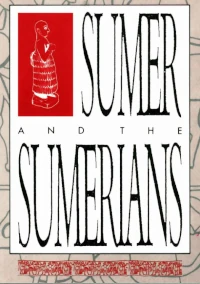
- Sumer and the Sumerians
- R0n
- 172 views 12 months ago
-
-
-
-
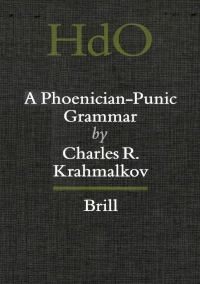
- A Phoenician-Punic Grammar
- R0n
- 143 views 12 months ago
-
-
-
-
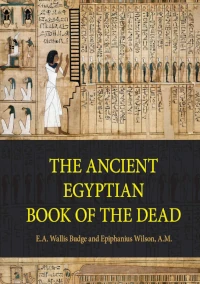
- The Ancient Egyptian Book of the Dead - Prayers, Incantations, and Other Texts from the Book of the Dead
- R0n
- 187 views 12 months ago
-
-
-
-
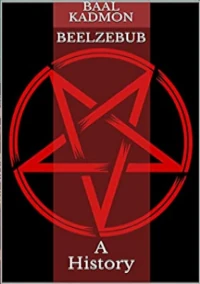
- Beelzebub: A History - Baal Kadmon
- R0n
- 37 views 2 months ago
-
-
-

-
- The Dead Sea Scrolls Bible - The Oldest Known Bible Translated for the First Time into English
- R0n
- 183 views 12 months ago
-
-
-
-
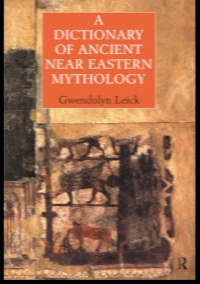
- A Dictionary of Ancient Near Eastern Mythology
- R0n
- 140 views 12 months ago
-
-
-
-
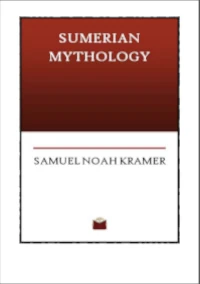
- Sumerian Mythology
- R0n
- 168 views 12 months ago
-
-
-

-
- Greek Dictionary Of The New Testament by James Strong
- R0n
- 142 views 12 months ago
-
-
-
-
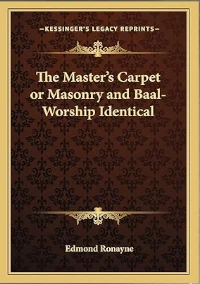
- The Master's Carpet or Masonry and Baal-Worship Identical
- R0n
- 50 views 2 months ago
-
-
-

-
- Madonna - Sex
- R0n
- 181 views 12 months ago
-
-
-

-
- The Secret Science of Numerology - The Hidden Meaning of Numbers and Letters
- R0n
- 188 views 12 months ago
-
-
-

-
- Massilia-Carthago Sacrifice Tablets Of The Worship Of Baal
- R0n
- 42 views 2 months ago
-
-
-
-
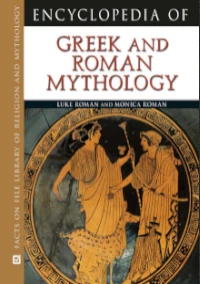
- Encyclopedia of Greek and Roman Mythology
- R0n
- 178 views 12 months ago
-
-
-

-
- Cassell's Latin Dictionary Latin-English & English-Latin
- R0n
- 157 views 12 months ago
-
-
-
-
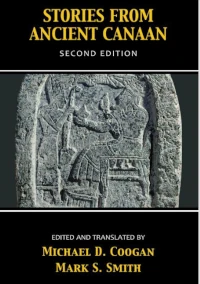
- Stories from Ancient Canaan, Second Edition - Michael D Coogan, Mark S Smith, Mark S Smith, Michael D
- R0n
- 36 views 2 months ago
-
-
-
-
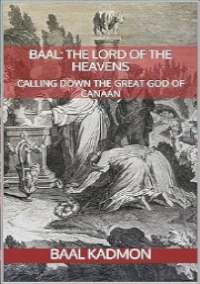
- Baal: The Lord of the Heavens: Calling Down the Great God of Canaan
- R0n
- 34 views 2 months ago
-
-
-
-
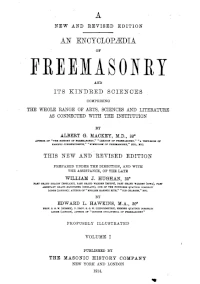
- An Encyclopedia Of Freemasonry 1916 Vol 1 - A G Mackey
- R0n
- 148 views 12 months ago
-
-
-
-
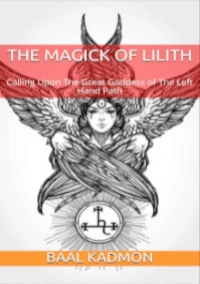
- The Magick Of Lilith: Calling Upon the Goddess of the Left Hand Path
- R0n
- 41 views 2 months ago
-
-
-
-
- Simon Dovey - Eye of the Chickenhawk
- R0n
- 152 views 12 months ago
-
-
-

-
- Missing 411 - North America and Beyond by David Paulides
- R0n
- 148 views 12 months ago
-
-
-
-
- Canaanite Myths and Legends (Academic Paperback)
- R0n
- 140 views 12 months ago
-
-
-
-
- Numbers Their Occult Power and Mystic Virtues
- R0n
- 173 views 12 months ago
-
-
-
-
- The Magick of Thelema - A Handbook of the Rituals of Aleister Crowley
- R0n
- 183 views 12 months ago
-
-
-

-
- Les Dossiers X - English AI Translation
- R0n
- 47 views 2 months ago
-
-
-

-
- A Grammar of the Phoenician Language
- R0n
- 177 views 12 months ago
-
-
-

-
- In Search of the Phoenicians
- R0n
- 169 views 12 months ago
-
-
-
-
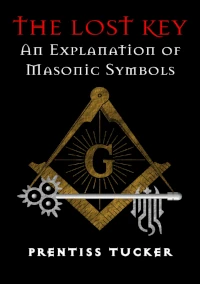
- The Lost Key - An Explanation Of Masonic Symbols
- R0n
- 145 views 12 months ago
-
-
-
-
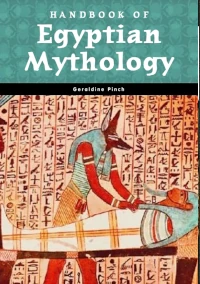
- Handbook of Egyptian Mythology
- R0n
- 168 views 12 months ago
-
-
-

-
- Phoenician-Punic Dictionary by Charles R Krahmalkov
- R0n
- 163 views 12 months ago
-
-
-